The mental health of professional musicians is clearly not in good shape. As reputable studies show, around a third suffer from clinically relevant depression, anxiety disorders or burnout. Suicidal thoughts and attempts are more common than in the general population, and up to half of all musicians suffer from performance anxiety. What is going on here? A conversation with clinical psychologist and musician Tobias Dolle.
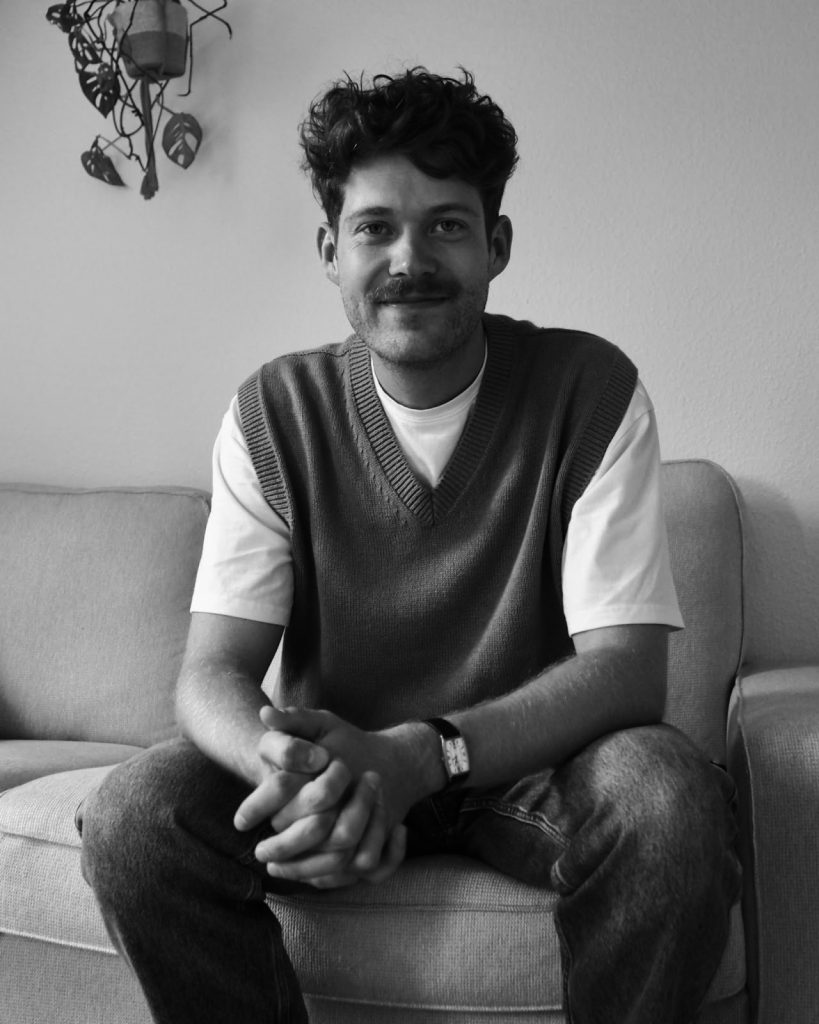
He comes to meet me at the revolving door to the foyer. The appointment was preceded by several emails. Now I meet Tobias Dolle in a hotel in Cologne city centre. The co-working space on the ground floor is well filled on this Monday afternoon. We find a seat on a fabric sofa. Dolle comes from Kassel and, after living in Bamberg and Mainz, has been living in the Rhine metropolis since 2022. Since 2024, he has been a member of the Mental Health in Music (MiM) association, a contact point for promoting mental health in the music and creative industries.
When asked whether he sees himself first and foremost as a musician or a psychologist, he replies that for him the two cannot be separated and that he has always intended to bring them together.
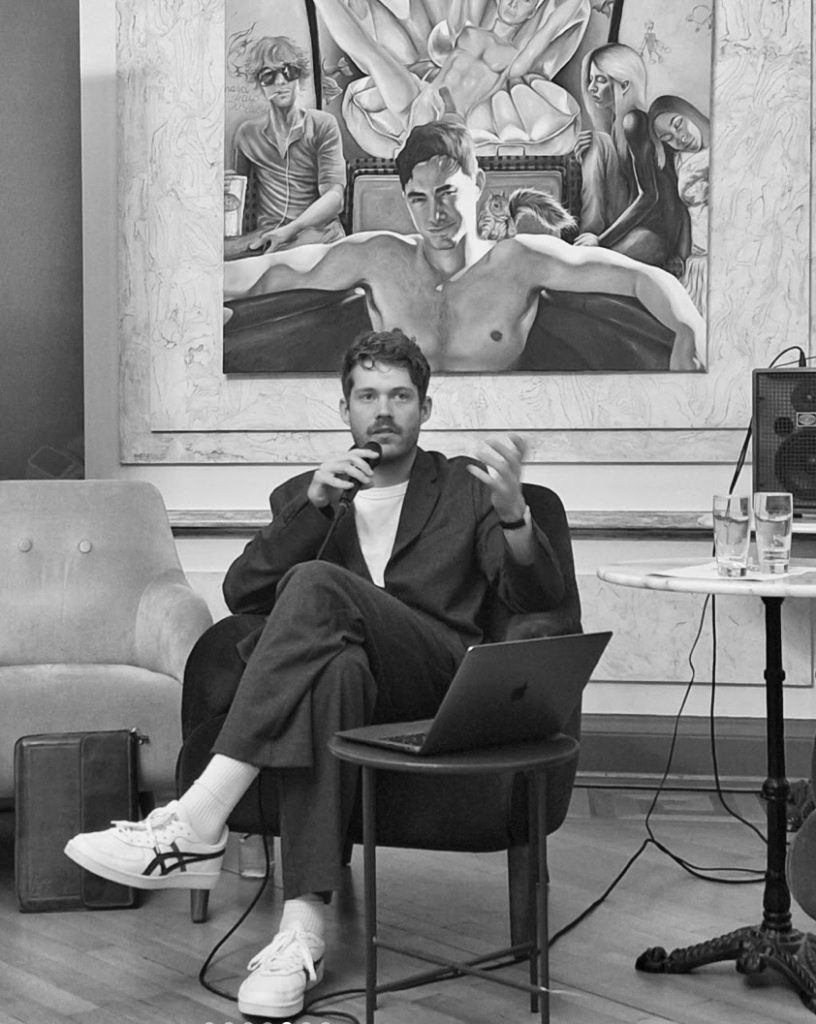
One day, he gives a lecture at JAZZ RLP – the state association for jazz in Rhineland-Palatinate – on mental health among professional musicians. The topic attracts enormous attention and there is a great need for discussion. Tobias Dolle himself is surprised by the topicality and urgency of the issue. Looking back, he says that the event was an ‘eye-opener’ for him. Today, he works as a consultant, lecturer and speaker on the topic of mental health in the music industry. I want to know what interests and moves the people he talks to in this context the most. It’s very individual, but – Dolle pauses for a moment – there are a few recurring themes: self-doubt, doubts about the sustainability of one’s career, regardless of previous success and status achieved.
Alfred Paschek: You say there is a great need within the music industry to address mental health and work-related stress. Has the situation in this sector deteriorated?
Tobias Dolle: Whether we are currently seeing a real increase in mental illness among musicians cannot be said with scientific certainty – we lack comparable studies from previous decades. We simply do not know how musicians fared mentally in the 1980s or 1990s and before, because there was no systematic research on the subject at that time. What we can see more clearly today, however, is that musicians are a risk group. Studies in recent years show very clearly that depression, anxiety disorders, chronic stress and even suicidal thoughts are much more common among them than in the general population.
So we can say that we don’t know whether it’s worse today than it used to be, but we are looking more closely at it now and we know that the situation looks rather bad compared to other occupational groups or the general population.
AP: So awareness of this complex of issues is still relatively new?
TD: Yes, that’s right. In the past, mental health issues in the music industry were often ignored or romanticised – according to the motto: ‘Genius and madness go hand in hand.’ Systematic research on this topic has only been conducted since the 1990s, initially focusing primarily on stage fright. Broad engagement with topics such as depression, burnout, performance pressure and self-esteem issues only began around 2010, and really took off in 2016. Researchers such as Musgrave, Gross, Kenny and Fernholz have put the topic on the scientific agenda in recent years.
In summary, one could say that we are perhaps not experiencing a new crisis today, but one that may have been around for a long time but is only now becoming truly visible.
We continue to discuss this point, in particular whether the ‘crisis’ among professional musicians that is now being talked about might not be more of a permanent state than a bad phase.
Tobias Dolle is also concerned with raising awareness of these problems and defending the interests of musicians. But he is not a lobbyist. He always strives to base his statements on the latest research. This includes acknowledging the current limitations of our knowledge. Whenever he goes beyond these limits in conversation and relies on personal assessments or assumptions, he makes this clear. This is also the case with this question.
According to Dolle, it is possible that some aspects of the music profession have always involved increased risks. At the same time, however, he believes there are many indications that the profession has become more difficult overall and that circumstances and conditions have worsened.
AP: The positive effects of music – whether listening to it or making it – on the psyche have been empirically proven many times over. Its use in numerous therapeutic concepts is now a common method for promoting mental health. So when we read that professional musicians in particular have an increased risk of mental illnesses such as depression, anxiety disorders and burnout, it raises questions. How do you explain this contradiction between positive effects and increased risk of illness?
TD: That’s a key point. Although music is something so beautiful, many people who earn their living from it find their profession very stressful psychologically. Music as an activity can have a healing effect – for example, in the form of music therapy or creative self-expression. But music as a profession is associated with structural stresses that often overshadow these positive effects. In particular, pressure to perform, financial insecurity, constant external evaluation, self-exploitation and the psychologically dense fusion of identity and profession increase the risk of mental illness.
AP: So the pressure, which arises primarily from working conditions, negates the positive effects?
TD: That hits the nail on the head! Musicians often report that their passion is literally ‘hollowed out’ by the reality of their work. The pressure to constantly market themselves (social media!), remain creative, survive financially and at the same time maintain artistic integrity (social media! Spotify!) creates a permanent level of stress. Reliable studies show that about one-third (approx. 30–35%) of musicians suffer from clinically relevant depression or anxiety disorders, with significantly higher rates of subclinical stress. The psychological strain is thus demonstrably higher than in the general population.
AP: So the widespread notion of the enviable artist who fulfils their potential and pursues their passion professionally needs to be corrected?
TD: Urgent. The romantic myth of the free, self-actualised artist obscures the reality of precarious working conditions. Many musicians work on a project basis, without social security, often for little or no money, consoled by the promise of future success, sustained by their own idealism, love of music, etc. This discrepancy between external perception and internal reality can be very stressful psychologically – it promotes shame when things don’t ‘work out’ and makes it difficult to seek help.
We are entering a sensitive area, namely the fear of stigmatisation and career disadvantages due to mental health problems. My conversation partner confirms that this plays a major role. In music circles (where professional and personal connections are often intertwined), such issues are rarely discussed, partly out of fear of losing prestige and partly because there is often subtle competition at play. Dolle sees great potential here for providing help in difficult situations. One promising approach could be to establish peer groups for mutual support.
AP: How great is the general need for education – especially among young people?
TD: Very great. Young musicians in particular often internalise a perfectionist ideal at an early age and see mental stress as individual failure. Studies show that music students, for example, suffer from performance anxiety, depression and low self-esteem at an above-average rate. This is precisely why there is a need for greater awareness, protective structures and concrete support services for this group. Universities and training institutions should urgently create programmes to provide early education about mental health, risk factors and support options. This is also confirmed by a relevant study by the European Commission.
AP: Are there any concrete figures on the prevalence of mental health issues in this occupational group?
TD: Yes – the data situation is now much better than it was a few years ago, and we can now say with greater certainty how severely musicians are actually affected:
According to the largest systematic review of mental health in the performing arts to date – the EQUITY study (2022) – the prevalence of depression and anxiety disorders [note AP: frequency within a specific group at a specific point in time] among musicians is between 23% and 36%. This is significantly higher than in the general population, where comparable studies (e.g. UK Mental Health Foundation) indicate a prevalence of around 17–19%. The often-cited figures of 68–71% from the Help Musicians UK study (2016) come from a non-representative pilot survey with voluntary participants and are now considered to be overestimated.
With regard to suicidal tendencies, the Belfast Study (2018) found that 60% of respondents from the creative sector had already had suicidal thoughts, 37% had a concrete plan and 16% had already attempted suicide. In comparison, according to the WHO, the rate of suicidal thoughts in the general population is usually 5–15%, with suicide attempts at around 4–6%. This means that musicians have a two to four times higher risk of suicidal behaviour.
With regard to music performance anxiety (MPA), the systematic review by Fernholz et al. (2019) cites prevalence rates of between 16.5% and 60% for clinically relevant anxiety among professional musicians. Younger musicians, women and soloists are particularly affected.
Reputable studies show that around a third of musicians (25–35%) suffer from clinically relevant depression or anxiety disorders. Suicidal thoughts and attempts are two to four times more common in this professional group than in the general population. And depending on the context, performance anxiety affects up to half of all musicians – often chronically and untreated.
The available data and study results refer to various European and non-European countries, adds the psychologist and musician. The findings are very similar everywhere.
Follow-up question: Could it be that a disproportionate number of people who are already predisposed to depressive episodes, prone to self-doubt or generally more sensitive are choosing to become musicians? This would mean that a significant proportion of mental health problems within the music industry are, so to speak, ‘imported’ rather than the result of internal problems. However, Dolle believes that shifting the blame in this way is misguided. He can imagine that the music scene has always attracted unstable characters and unconventional lifestyles. However, he believes that the conditions of the profession are the cause of most of the mental health problems experienced by musicians.
AP: There is obviously a big difference between playing music as a hobby and having to earn a living from it. Could it possibly be more appealing or even healthier to keep it as a hobby?
TD: That is indeed a valid question. Studies suggest that the transition from music as a passion to music as a livelihood is accompanied by a dramatic increase in stress and mental strain! ‘Musicians’ wellbeing’ is quite different from what the positive correlation between ‘music and wellbeing’ suggests. The creative activity itself remains fulfilling – but as soon as it is exploited economically, its potential as a resource is reversed.
AP: Would you advise certain people against pursuing a career in music?
TD: No. But I would advise them to take an honest look at their own mental constitution and the realities of the profession. This brings us back to the point that educational institutions such as music colleges need to raise awareness and create mental health courses, as recommended by the European Commission.
Those who tend towards extreme perfectionism, suffer from pressure to perform or have difficulty setting boundaries are particularly at risk in this profession. But there are two sides to every coin. Such characteristics can also be helpful for musical success. I am convinced that certain vulnerabilities can also have positive effects on personal growth and professional advancement – this is especially true for creative professions. Creative people can also respond creatively to career issues (e.g. by finding gaps in the market, using their broad interests to earn extra income in the form of a portfolio career, etc.). The key is to enable young musicians to make a CONSCIOUS DECISION about what the profession ultimately means to them, without scaring them off.
AP: How can I tell if something is wrong with my mental health or that of someone close to me? What should I do in that case?
TD: In terms of clinically significant symptoms that require therapy? Warning signs could include: persistent pressure to perform, sleep problems, emotional exhaustion, social withdrawal, suicidal thoughts, diffuse inner pressure, anxiety or panic attacks. The bottom line: suffering. In these cases, you should not hesitate to seek professional help – the sooner, the better. At the same time, it is important to create an environment in which mental health issues can be discussed without being seen as a weakness. And I want to emphasise that a clinical diagnosis such as depression or anxiety disorder requires psychotherapy with a licensed psychological or medical psychotherapist – not coaching, not counselling, not a non-medical practitioner (not even a non-medical practitioner for psychotherapy)!
AP: One could get the impression that we live in increasingly overstimulated, hyper-nervous, stressed-out communities. Can we actually still be saved?
TD: That’s quite a broad question. I’ll limit myself to our topic in the music industry. Based on my observations and my understanding of psychology, I can say that creativity actually needs emptiness, blurring, unavailability – but these states hardly have any place in today’s culture industry. The constant focus on reach, streaming figures, likes and followers creates a climate of permanent presence. Those who are not visible are forgotten. Those who cannot be measured are seemingly worthless. And visibility is not mere vanity – it is often essential for survival, because with the collapse of traditional sources of income (such as CD or ticket sales), attention has become currency. Musicians are no longer just fighting for artistic relevance, but for their economic existence.
In addition, visibility is increasingly replacing quality. A study on virtual cultural markets (Salganik et al., ‘MusicLab’, 2006) clearly shows that success in digital markets does not depend primarily on artistic quality, but on social influence and early visibility boosts. Those who receive a lot of attention at the beginning are ‘washed’ further up – the content is secondary. This is the so-called Matthew effect (to those who have, more will be given). The result is creative distortion: musicians who are financially dependent on their output are forced to produce recognisable, algorithm-friendly and genre-compliant content – because anything else remains invisible. The new, the contradictory, the experimental, the things that come from within have a hard time in a system that rewards recognisability above all else.
What Theodor W. Adorno described in the culture industry of the 20th century – namely the administration and standardisation of art in capitalism – is reaching a new peak today. The quantification of creative work, the pressure to compare oneself on specific platforms, and the economic exploitation of attention mean that many artists are no longer able to work freely. And something else has changed: today, machines can create cultural products themselves. Tools such as SUNO generate AI-generated songs in seconds – complete, stylistically perfect, technically flawless. This means that not only are humans competing with each other, but humans are also competing with machines that know no breaks, no crises, no uncertainties.
And as for the question of whether we can still be saved: yes – but only if we defend the inner space in which art can emerge. A space beyond the market, platforms and algorithms. This is not a nostalgic utopia – but a basic psychological need. Without this space, not only does art wither away – but so do the people behind it.