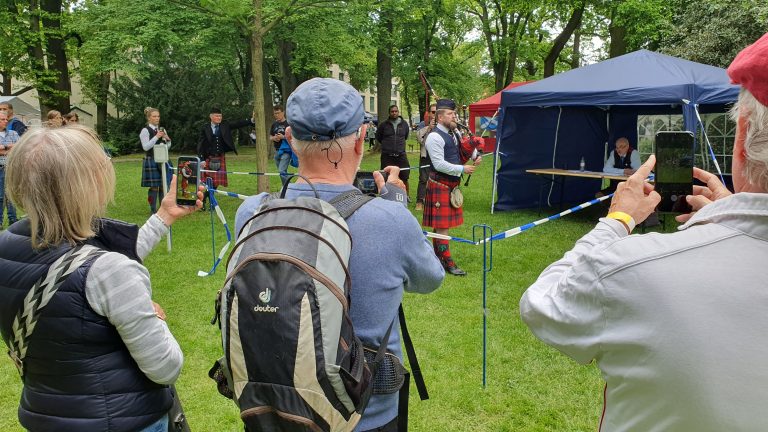
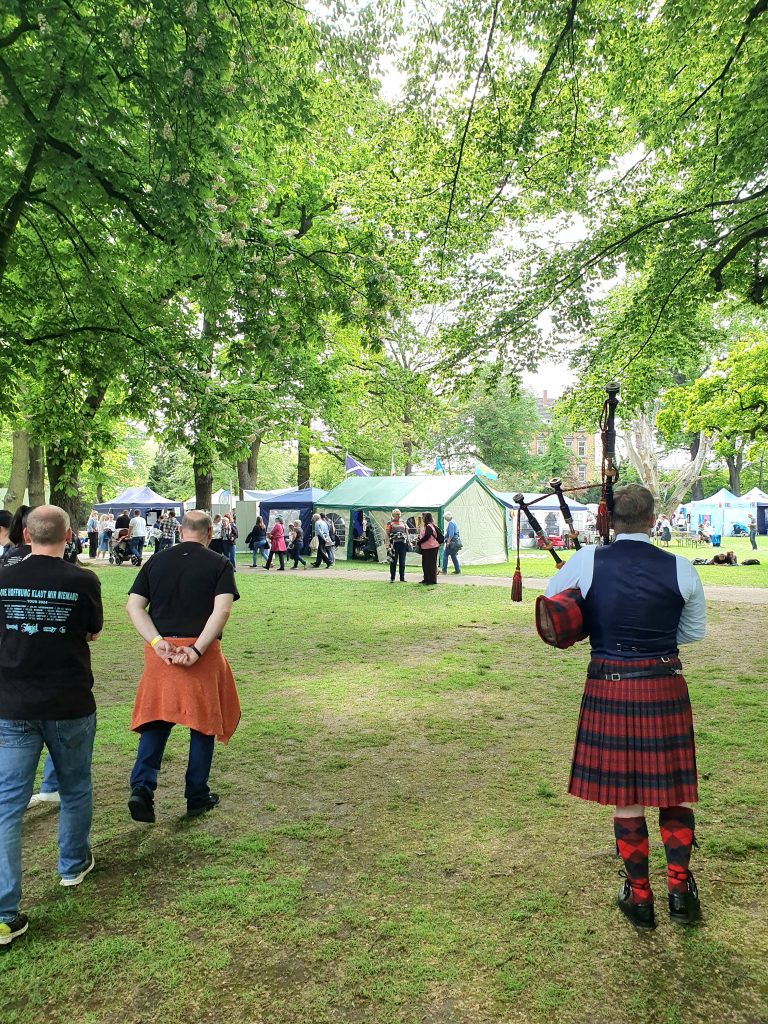
It’s lunchtime on a Saturday in May. The city park is filling up with visitors. According to official figures, around 30,000 people are expected this weekend. The ‘Highland Gathering’ in Peine is considered the largest event of its kind on the European mainland. A tour of the venue.
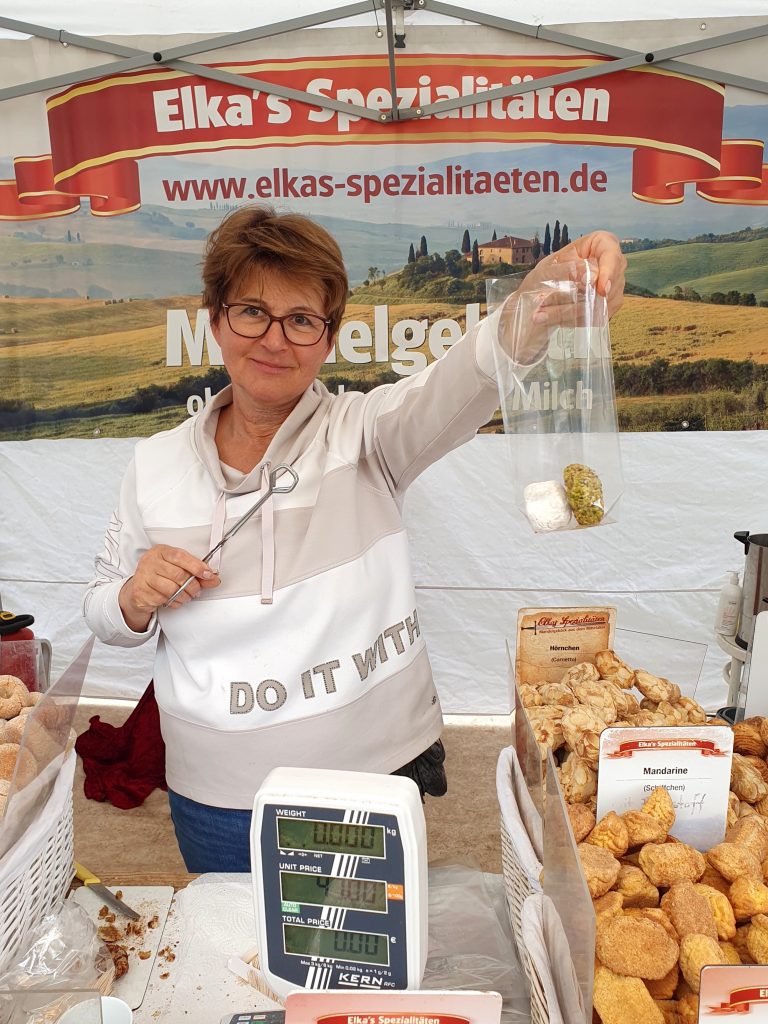
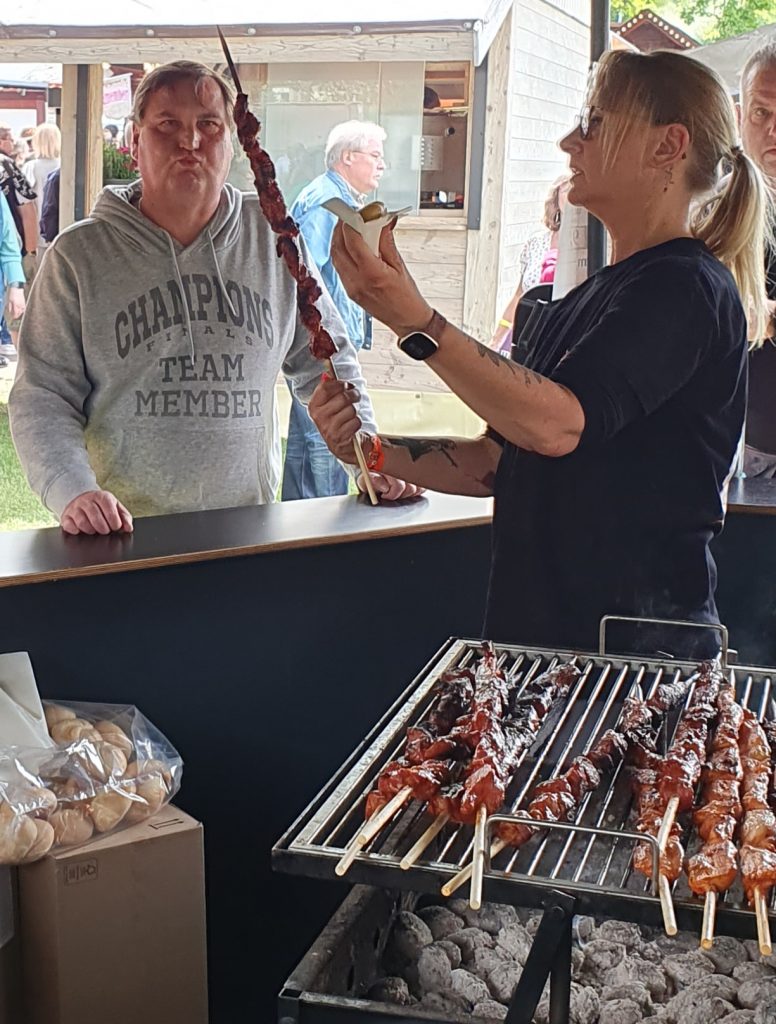
“My name’s Eva, and I want to tempt you!” OK, why not!? Moments later, I’m holding a bag of Italian almond biscuits. “That’ll be 4.60 euros.” Eva, whose real name is Elka, is from Tuscany, lives in Wolfenbüttel and has been selling her wares at the Peiner Highland Gathering for 15 years. It’s always lovely and lively there, she says, and the people are in good spirits. She likes the music too. And business? “Quite okay” so far. But then again, the event has only just begun.
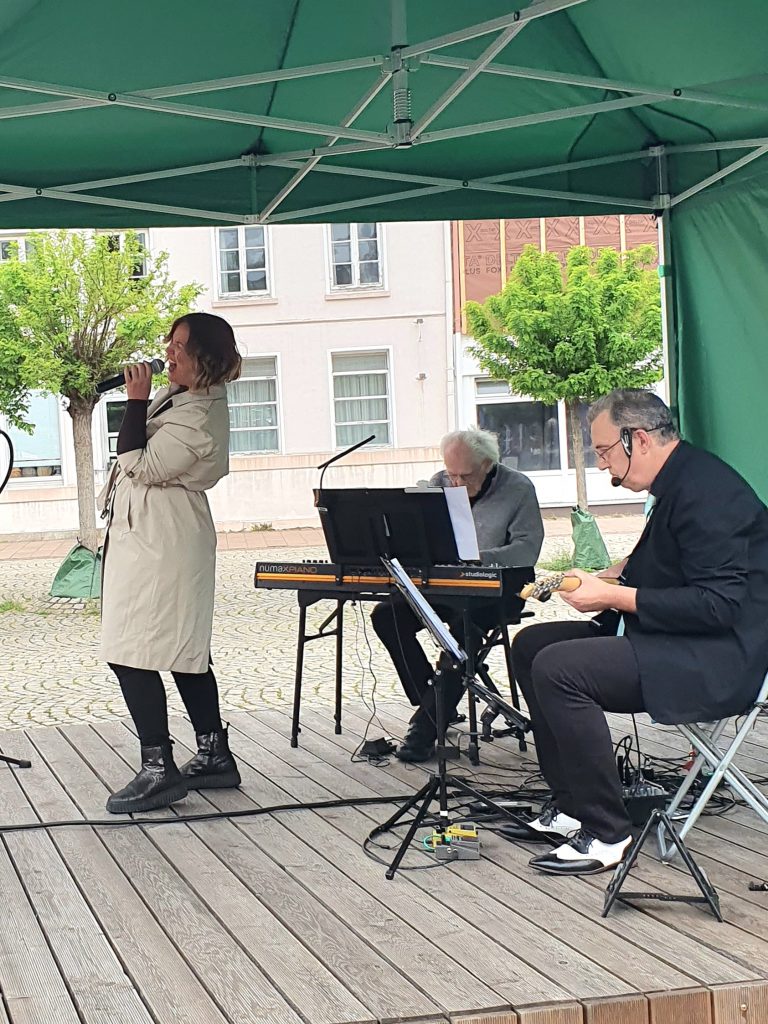
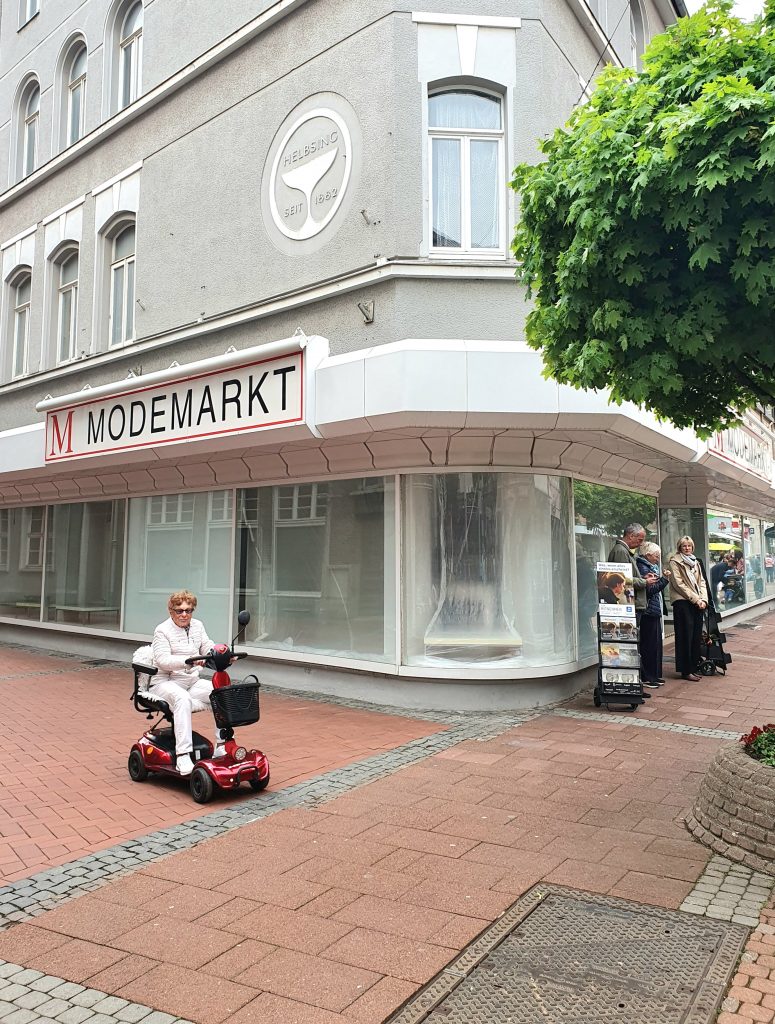
The pedestrian zone is just a few minutes’ walk from the park. Visually, it captivates with its picturesque half-timbered architecture, typical of the region. At the same time, the picture is characterised by vacant premises, discount stores and an ageing population. On the market square, a young woman, with musical support from two older gentlemen, sings on an ‘open stage’ to combat the small-town dreariness. Two senior citizens, probably in their mid-60s, dressed in practical clothing, sit some distance from the stage and listen to the trio.
“Could I charge my phone for a moment?”
My mobile phone battery is running low. It’s only about a hundred metres from the open-air stage to the city marketing office. Perhaps there’s a charging point there. Sure enough, a friendly member of staff plugs my phone into a socket behind the counter. There’s no one else in the room – a mix of a merchandise shop and a tourist information centre – apart from the two of us. However, as the helpful lady points out, it had been busier earlier. And later there’s a guided tour of the town, followed by a whisky tasting in the office courtyard. There, blue paper flags with white crosses flutter above beer benches, whilst a man from a cleaning firm is still mopping the floor in the toilet block.
You hear in many places that the Highland Gathering is of great importance to the town. That’s not entirely implausible. With a population of around 50,000, Peine lies far in the shadow of its neighbours: the Lower Saxony capital of Hanover to the west and the ‘Löwenstadt’ of Braunschweig to the east. The annual ‘Schottenfest’, as the event is commonly known here, gives the small town the opportunity to present itself as a culturally significant venue with an international focus.
Major Event in the Continental Pipe Band Scene
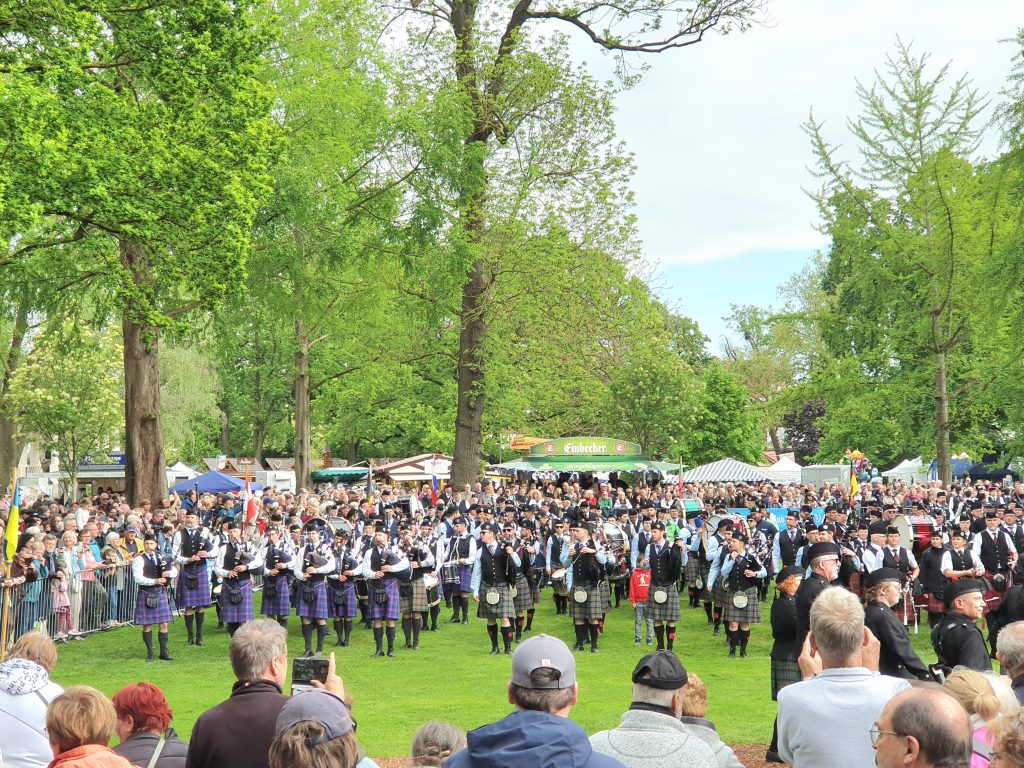
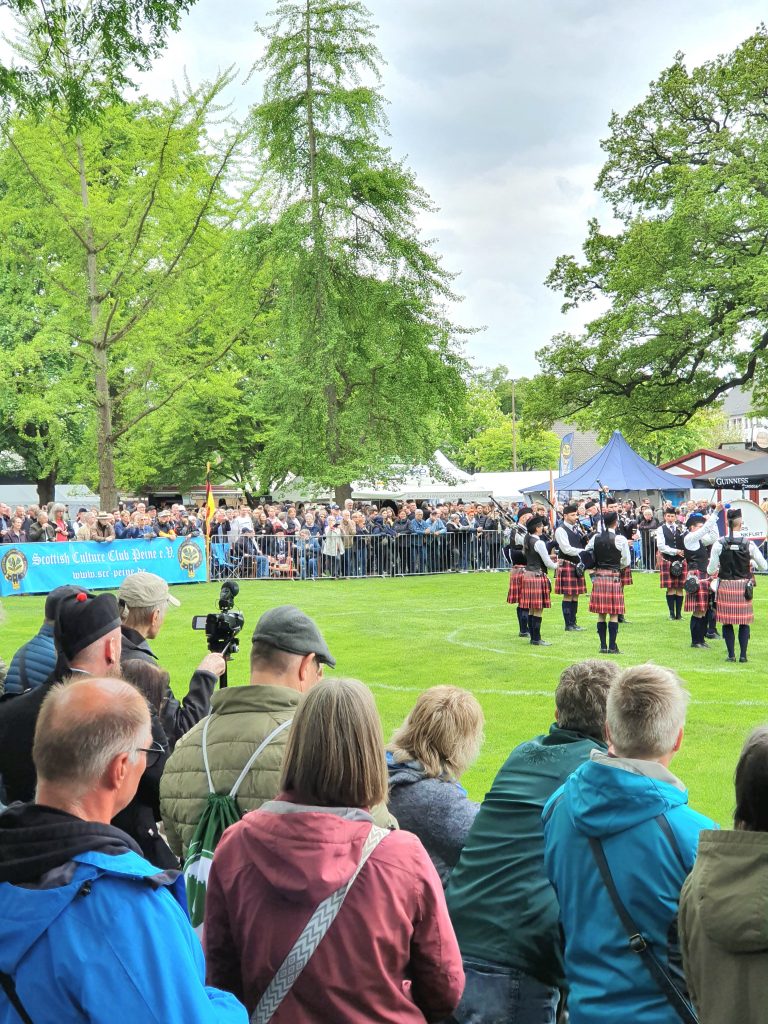
Back in the park. The Peine International Pipe Band Championships are in full swing. A total of 23 bands from Germany, Belgium, the Netherlands and Denmark are competing.
At the edge of the ‘Competition Arena’, four men in Highland dress are standing at a beer stand. They’re from Hamburg and belong to the St. Pauli Pipes & Drums – a section of the famous football club founded in 1910. Their chairman, Dennis Cole, watches the competition unfold with a relaxed air. Reflecting on their own performance about an hour ago, he says: “Our performance wasn’t outstanding, but it was fine.”
In general, Cole adopts a relaxed attitude towards the whole business of competition and performance. Having been active in such groups for 36 years, he has seen first-hand how bands can literally fall apart under intense pressure. “We deliberately prioritise the joy of music and performing together. Of course, we’re musically ambitious, but achieving specific placings in competitions isn’t our ultimate goal. All in all, we just want to have a good time here.”
Stress Behind the Chip Shop
Melanie is also having a good time at till 3, a sort of secret entrance with no queues at the eastern end of the city park, tucked away behind the bands’ pavilion camps, where few visitors venture. It’s her first time working at the event; she’s still lacking routine and knowledge of the procedures, which is why she’s glad to be stationed in this quiet little hut. We chat about the background noise (“Not recommended for dogs!”), a security guard shooes away teenagers on e-scooters, and every now and then a ticket crosses the counter. For the young woman, all this is something of a big musical get-together; she likes the sound, but the competitions don’t really interest her.
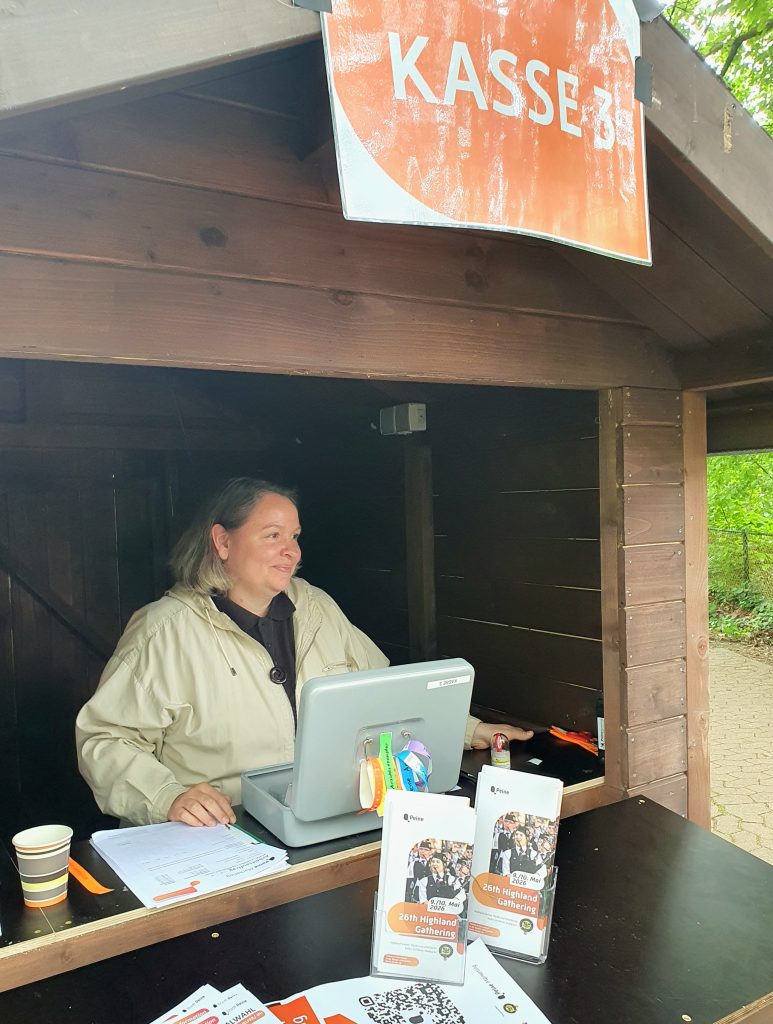
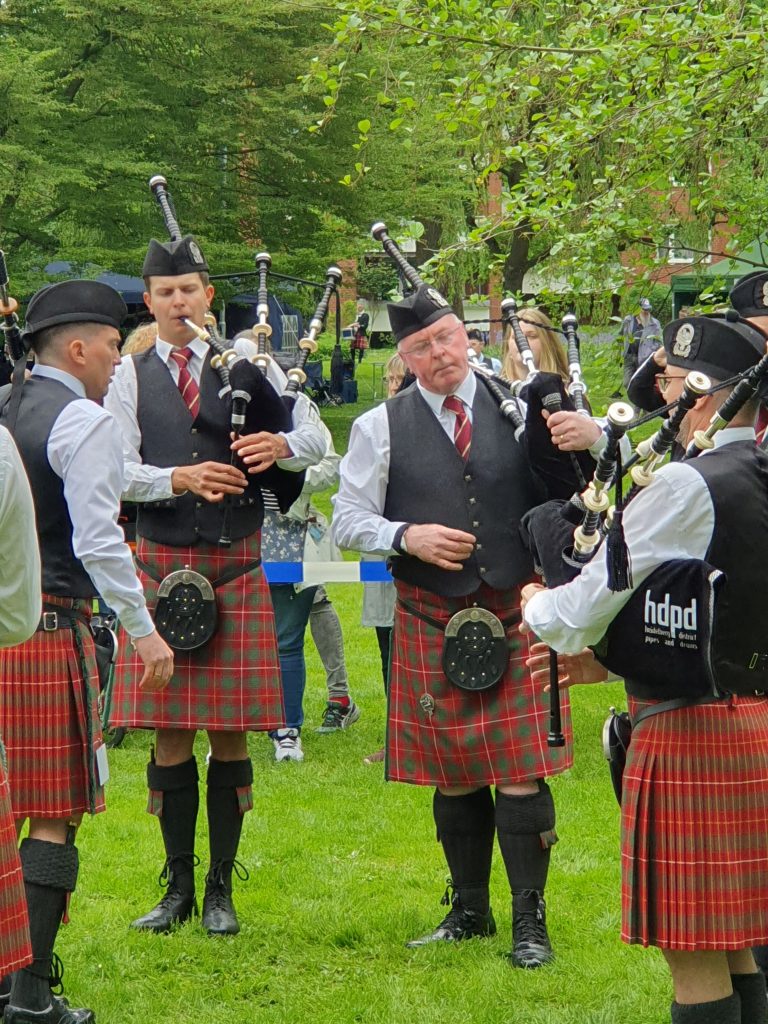
From Melanie’s ticket booth, you can look out over the lawn where the pipe bands are busy with their ‘final tuning’ before facing the judges’ verdict and the audience’s gaze. It is the place where, for quite a few players, the tension reaches fever pitch. Sausages, a children’s bouncy castle, a festive atmosphere – all light years away. Instead, there’s a flurry of activity, notes are out of tune, no time left to tune up, band members dropped from the line-up; just before the start, they’re now spectators. That’s how it can go. Others move towards the starting line with practised ease and calm precision, play their set and walk away with confidence.
“We’re Happy to Do This for Scottish Culture”
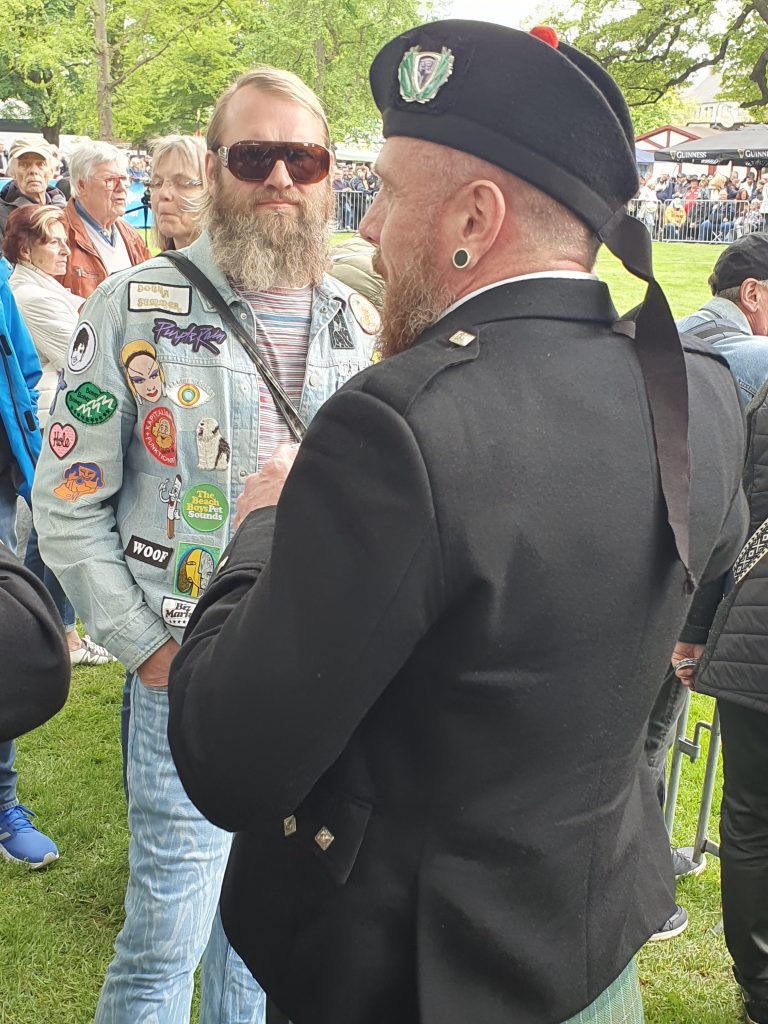
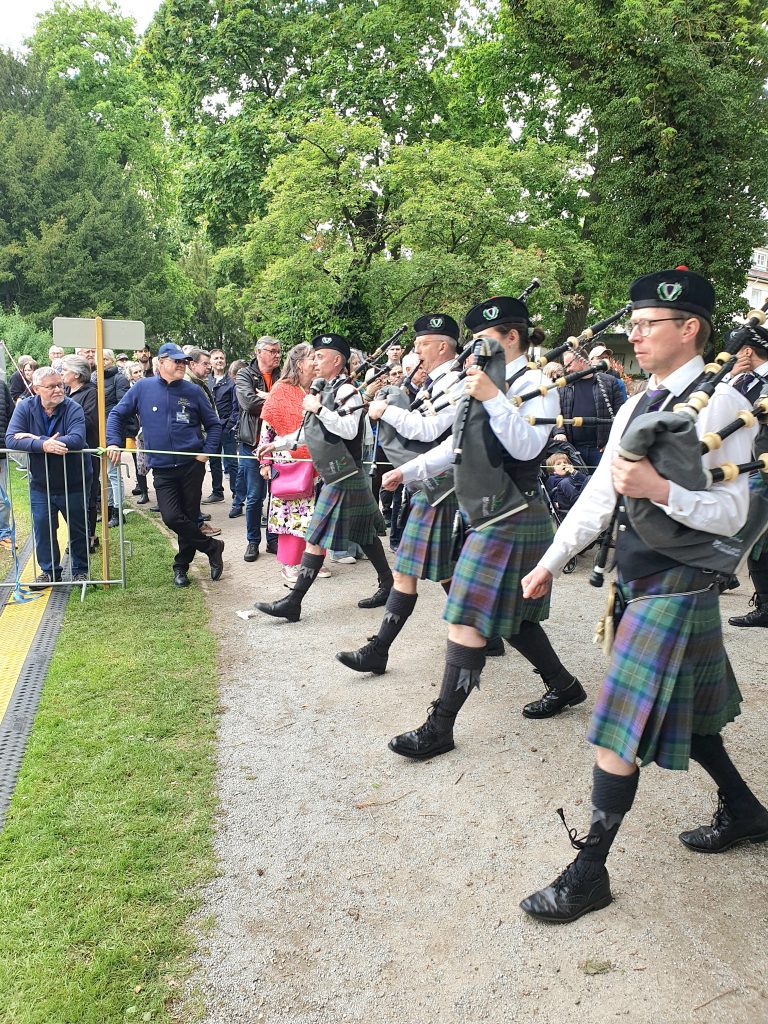
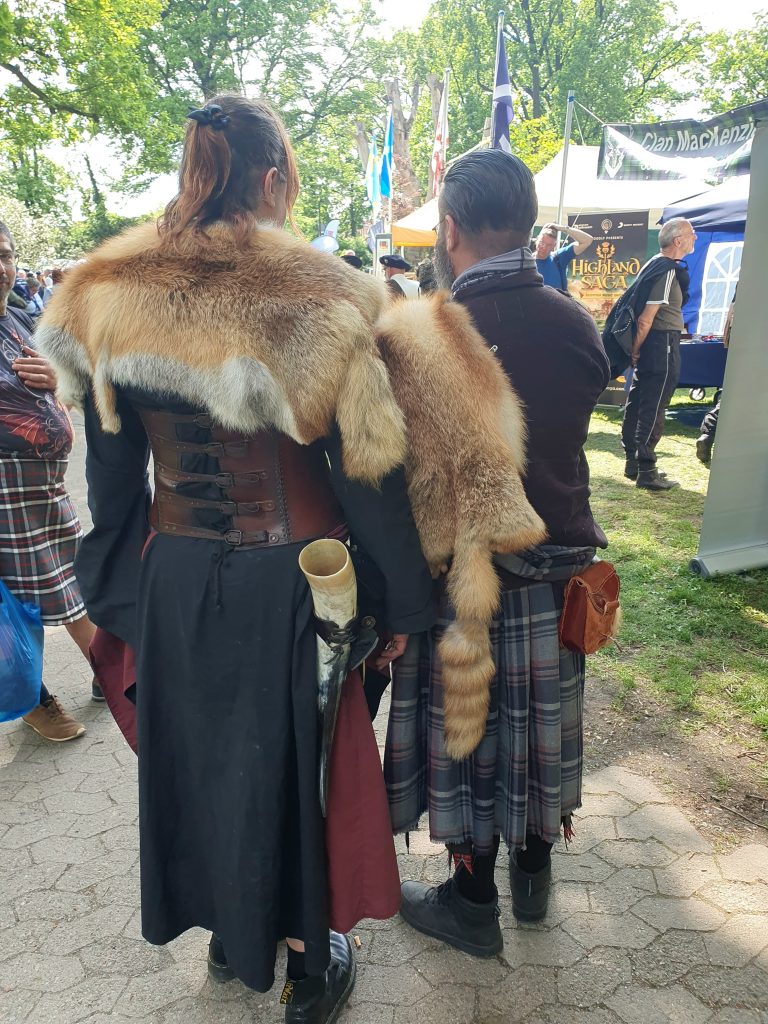
The competition draws to a close in the late afternoon, and at around 5.30 pm the bands march up for the prize-giving ceremony. Uniforms, shouted commands, a touch of military flair. Peine offers a complex competition and festival format that combines elements of a cultural event, a scene hangout and a folk festival. Since 1998, it has taken place in the approximately four-hectare park area near the railway station. It was launched by the local Scottish Culture Club Peine e. V., which organises it in collaboration with Peine Marketing GmbH.
The combination of club-organised enthusiasm for Scotland and municipal marketing logic is likely to contribute to the language of advertising and reporting surrounding this Highland event sounding somewhat hyped up and occasionally slipping into a strange attitude of admiration and reverence. There is scarcely a sentence in which Scottish culture is not extolled, the Scottish way of life evoked, or Scottish traditions celebrated. The affirmative sentiment feels over the top.
For this district town nestled between the Harz Mountains and the heathland, the ‘Gathering’ is undoubtedly a stroke of luck. Anja Barlen-Herbig, managing director of Peine Marketing GmbH, sums it up as follows: ‘Every location is on the lookout for a cultural beacon, a truly special event that is one of a kind. The Highland Gathering has been part of Peine’s identity for more than 25 years.’ Peine – from the mid-19th century right through to the 1970s, it was primarily a steel town, a working-class town. Then the decline set in. Although this sector of the economy was able to recover in the years that followed – today it is home to one of Europe’s most modern electric steelworks – its former pre-eminent importance was a thing of the past.
Highland Gathering Attracts Customers
On Sunday, the two-day festivities continue. Today’s main attractions are the ‘Highland Games’ (log throwing, tug-of-war, etc.) and the solo piping and drumming competitions. My hotel is in the Stederdorf district, north of the town centre. Breakfast starts at 6.30 am; I’m too early, but the receptionist pushes the barrier cord aside and shows me where the coffee is. I want to know whether the Scottish event is also noticeable in the hotel’s business. The answer is clear: “Oh yes!” This weekend was the only one of the year when a significant number of guests came from out of town. Otherwise, the venue was mainly booked for larger celebrations such as weddings, and the clientele usually came from the town itself or the surrounding villages.
The drive to the venue takes about five minutes by car. My cash is running low. So back to the pedestrian zone. There are three ATMs in the bank branch; you can print out statements, but there’s no cash. Back again. The sun is shining, Melanie is at till 1 today, and the stalls and stands in the event area are gradually opening.
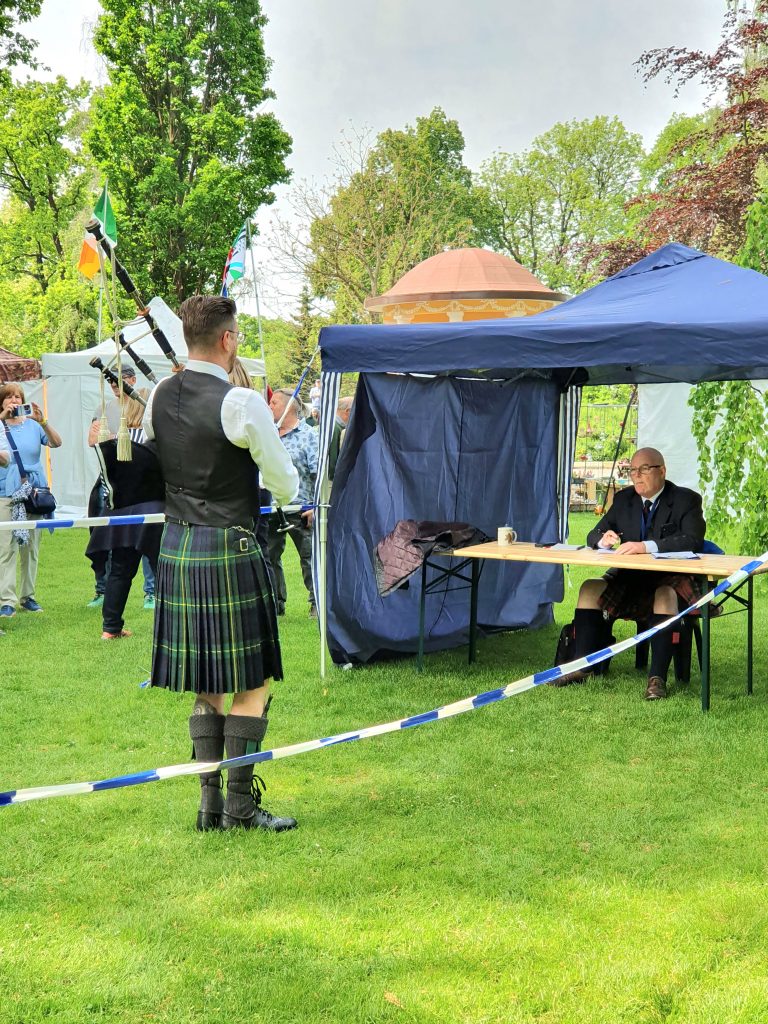
In the late morning, the solo competitions for pipers and drummers begin. For this, six small areas have been marked out at the back of the park with blue and white barrier tape, each with a gazebo, table, chair and a ‘judge’ – an experienced and knowledgeable adjudicator with scene-specific authority.
For Those in the Know
The soloists arrive at their designated spot according to the schedule, wait for a signal to enter the stage, and are greeted with a more or less brief welcome, occasionally followed by a short conversation, warm-up and tuning, until the actual performance begins. A slot lasts – depending on the category – five to ten minutes, after which the process starts all over again with the next candidate. Criteria assessed include, for example, instrument tuning, pitch stability, technical precision of finger technique, rhythm and timing, and musical expression. The Bagpipe Association of Germany e. V. (BAG), co-organiser of the competitions, has specific rules based on the standards of the Royal Scottish Pipe Band Association.
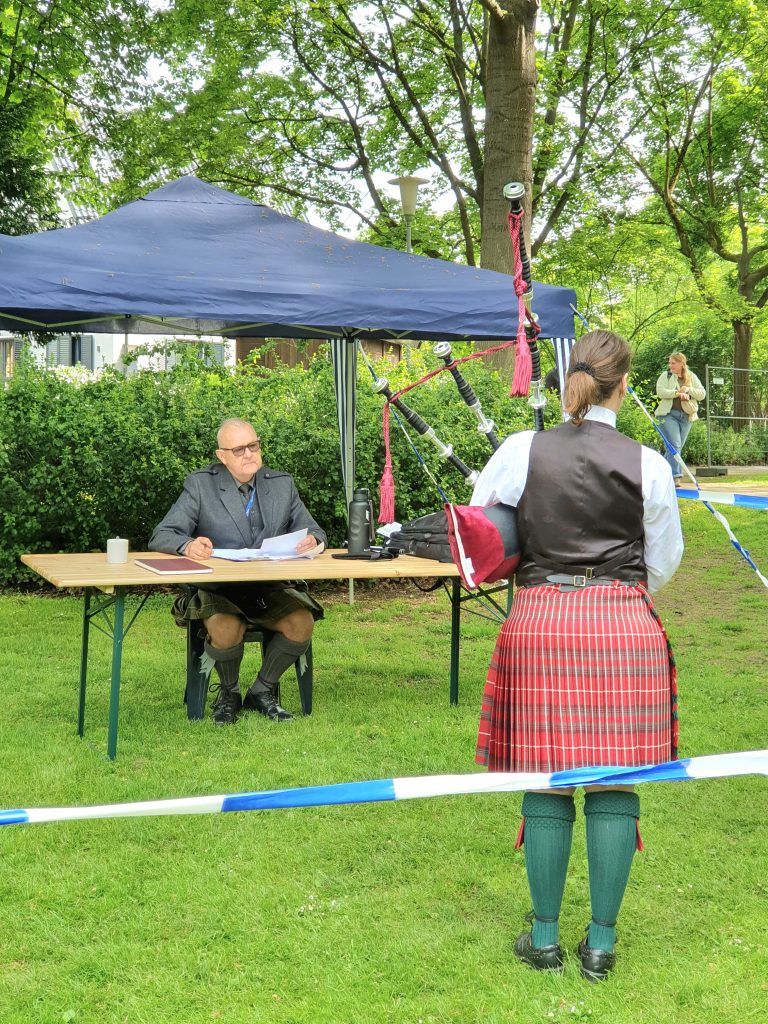
A young couple strolls between the solo performance areas. Both are from Peine and come here every year. Even after several years, he still doesn’t really understand what’s actually happening behind the fluttering ribbons. His companion agrees: “The competition proceedings are incomprehensible to ordinary visitors and simply pass them by.” This statement confirms a general impression: on Sundays in particular, there are effectively two events taking place. The Highland Games, which are clearly ahead in terms of mass appeal with their fairground atmosphere, and the exclusive competition proceedings at the far end of the park.
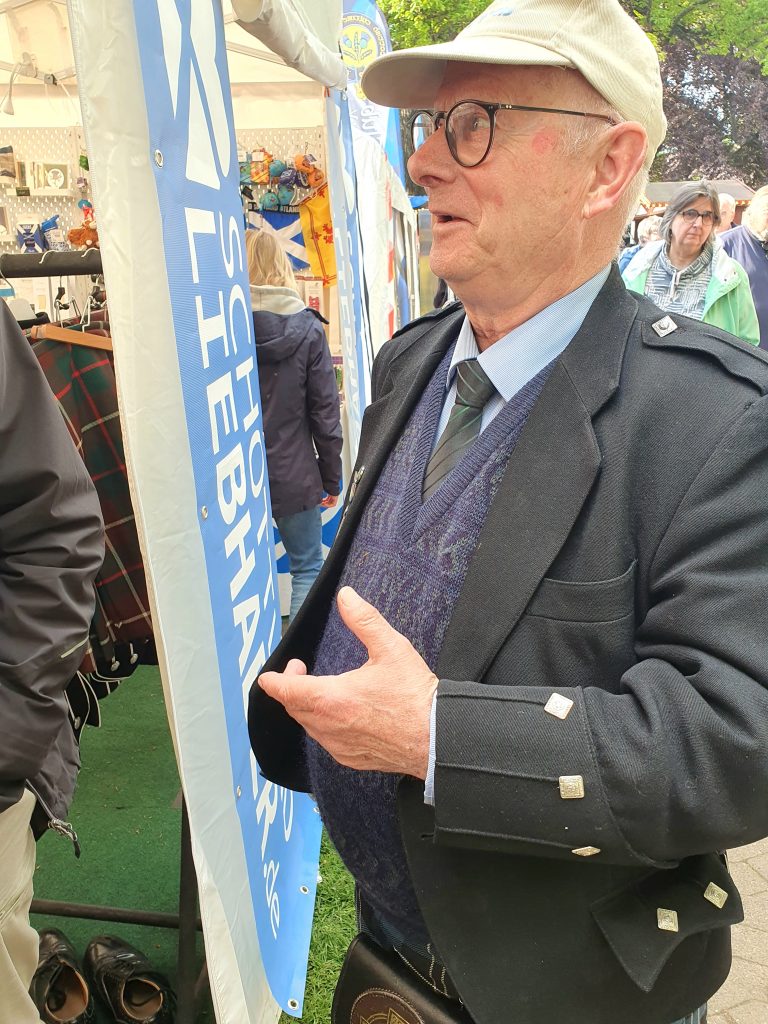
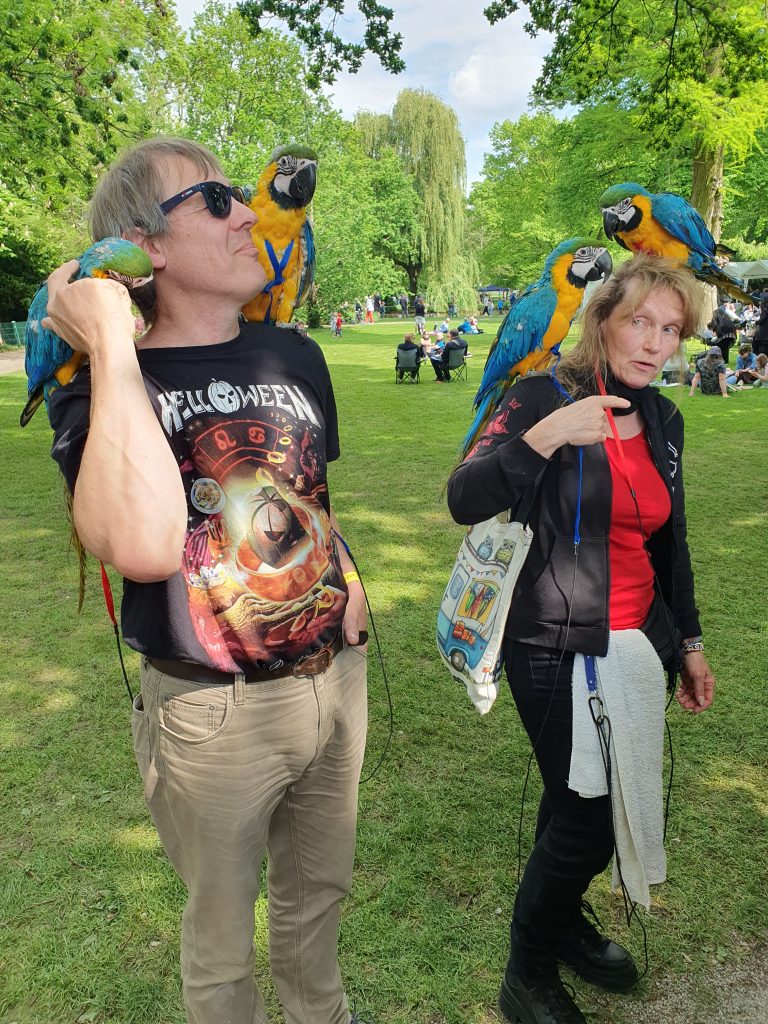
and leader of the entertainment band Happy German Bagpipers
Why competitions?
The BAG also devotes a section of its website to this question. It refers to the historical context in 18th-century Scotland. However, a pithy answer is lacking.
In front of Arena A stands a woman in her mid-40s, dressed in a band outfit, instrument in hand. She has already performed her solo piece and is now watching the other entries. When asked why she is taking part, she doesn’t answer straight away, but pauses to think for a moment. She says her main aim is to get feedback on her current abilities and to assess or confirm her musical progress.
After more than six hours on this second day, I’ve had enough. The background noise is becoming exhausting, and besides, I’ve run out of money. On my way to the exit, I pop round to see Eva/Elka again. She looks a bit exhausted, but satisfied. I ask if the crowd was in good spirits again. She smiles. She wants to come back next year.